Spring on the Wholesale Grid Isn't Quiet Anymore
Outage activity compressed into April and May now meets data center load that no longer follows seasonal rhythms
Spring on the wholesale grid used to be quiet. That's not true anymore.
Historically traders would get a breather after the winter months and gear up for the annual FTR auctions. But the shoulder season increasingly demands attention, and is fraught with significant volatility.
The grid has changed faster than the trading conventions built on top of it. Significant data center load growth, a shifting generation mix, and structural transmission constraints have created price dislocations across the footprint that Western Hub simply doesn't capture. The risk doesn't live in on/off-peak blocks anymore; it lives in specific hours, around specific events, in specific zones.
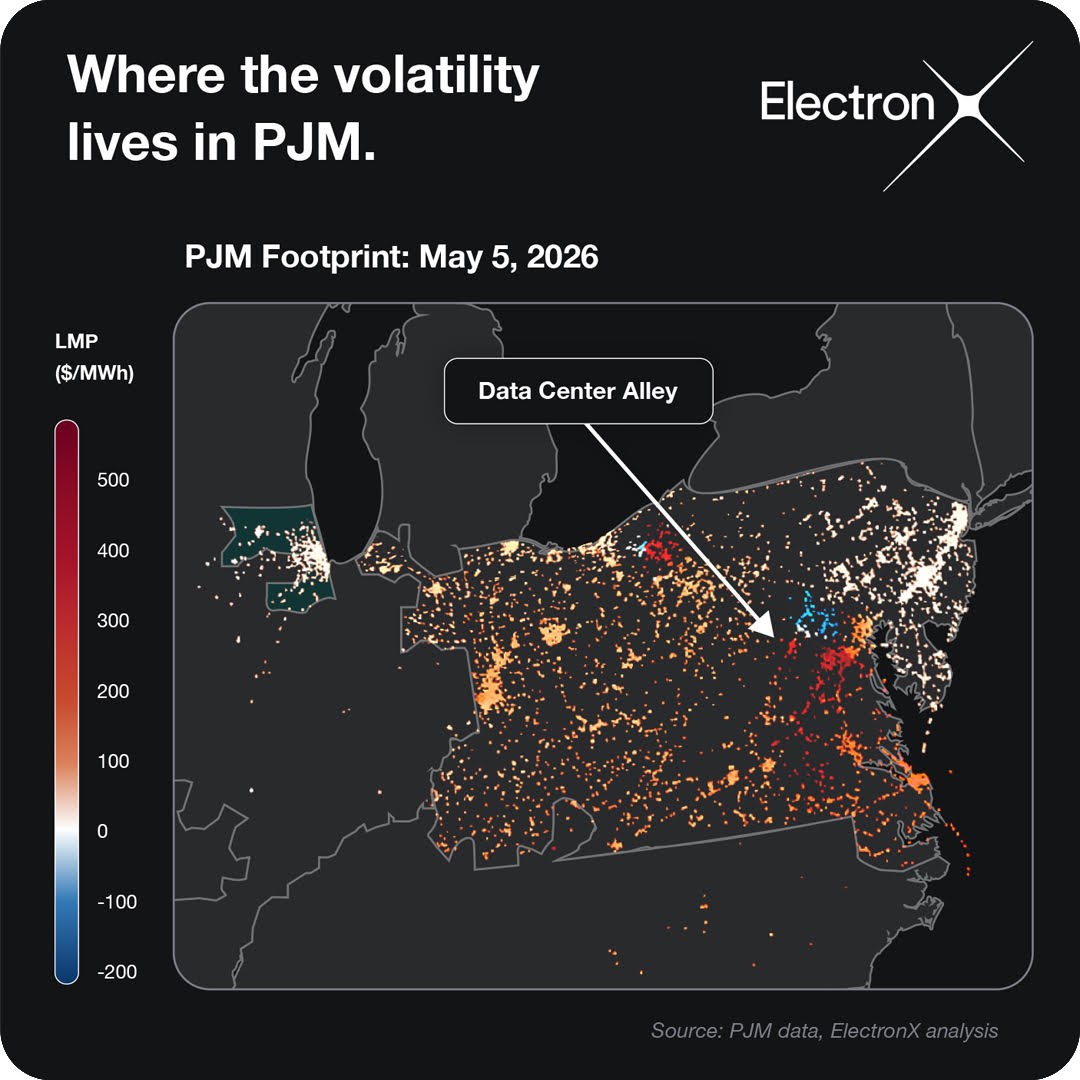
Dominion congestion has surged in recent weeks, driven by persistent factors likely to worsen before they improve. Pleasant View XF and Ox XF have been binding heavily in Northern Virginia, and Brambleton 230 kV network outages are compounding the pressure on an already-stressed corridor concentrated in Data Center Alley — where load no longer follows seasonal rhythms and servers don't power down for spring.
There's also a structural reason outage activity peaks right now. PJM's planning year ends 31 May. Transmission owners push hard to complete scheduled maintenance before summer, when pulling equipment offline becomes operationally difficult. The result is a compression of outage activity into April and May, historically mild months where the grid had slack. That slack is gone.
What's striking isn't just the magnitude of the congestion — it's the location. This isn't a Western Hub story; Dominion Zone congestion is increasingly its own event, with its own drivers, timing, and magnitude.
The warning is straightforward: if Pleasant View XF and Ox XF are binding in May with mild temperatures and soft industrial load, consider what the same outage topology looks like when Dominion cooling load arrives in June and July and data center load doesn't slow down.
A few things worth watching as we move into peak season:
- Morning and evening ramps around outage-constrained topology are where the real risk lies, not the hours on/off-peak categories were built around.
- Dominion Zone basis moves independently of Western Hub in ways that matter for LSEs and generators with physical exposure in the I-95 corridor.
- DA/RT divergence in Dominion has widened. Day-ahead positions are an imperfect hedge against real-time exposure.
Dominion Zone futures on ElectronX are available for participants who want to trade the specific hours and zones where this congestion appears — not a blunt hub proxy, but the zone itself. The action this summer may not be where the liquidity has historically been.