CAISO's Battery Hangover
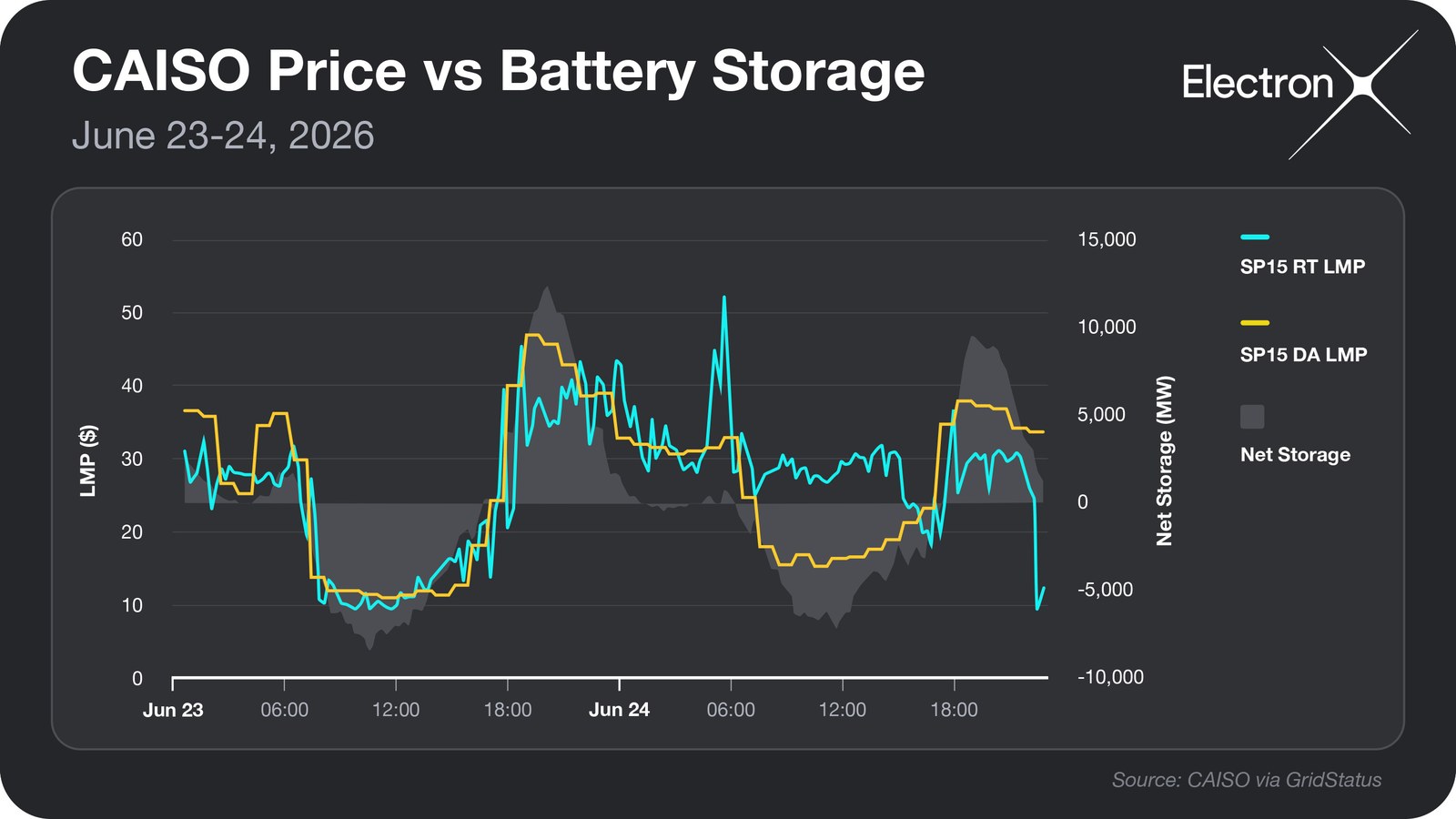
A record 12,617 MW discharge left CAISO short of flexible capacity the next morning, flipping the DA/RT spread
Battery storage is now one of the primary forces shaping intraday power prices in CAISO.
What happened over two days in late June is a clear illustration of why. On 23 June, CAISO set a new battery discharge record of 12,617 MW. Batteries ran hard into the evening ramp and depleted themselves in the process. Overnight there was minimal opportunity to recharge before morning load picked up.
The result showed up immediately in prices. On 24 June, real time outpaced day ahead through the morning and held above it for most of the day. With batteries running low, the grid had less flexible capacity available to absorb the morning ramp, and RT prices reflected that. As batteries spent the day charging for the evening ramp rather than discharging, that charging demand put additional upward pressure on RT through the midday hours.
The DA/RT spread here is worth focusing on. On 23 June, when the discharge record was set, RT was actually running below DA as batteries suppressed real-time prices. Once they depleted, the dynamic flipped — 24 June was the hangover.
This is not an exotic edge case; it's a predictable consequence of how large battery fleets behave across consecutive days. A participant positioned only in day ahead, without the ability to rebalance at the hour level, was exposed to that spread with no way to manage it.
ElectronX offers open access to hourly power contracts in CAISO — no OTC brokers, no FCMs, no RTO queue to manage. Just the ability to transact at the granularity the market actually requires.